


A long-term vision
The Strategy aligns to the delivery of Our Priorities for Government 2025-2029, where all Western Australians can access the healthcare we need, when we need it. This includes a particular focus on promoting wellbeing, more support for mental health and alcohol and other drugs services, and delivering community-based alternatives to emergency departments.


Aspirations for change
The Strategy talks about systems transformation, which means changing our ways of thinking and working so that services, programs and supports are designed and delivered in ways that people want and need.
It includes Aspirations that describe what our mental health and alcohol and other drugs systems should look like if systems transformation was to be achieved. Aspirations illustrate the ambitions for change, across four domains: People, Community, Services, and Leadership.
People
- Everyone’s unique experiences, goals, culture, strengths, and challenges are respected.
- People and communities are supported to meaningfully participate in decisions that impact their lives and wellbeing.
- People are met with openness and understanding, and without stigma and discrimination.
Communities
- Communities support local connection, cultural safety and wellbeing through the development of place-based and community-led solutions that account for the localised context.
- Service planning and development considers the social, environmental, structural, commercial and cultural determinants (determinants of health).
- Relationships are established across government, non-government and private organisations.
Services
- Prioritising support for people in the community to stay well and thrive.
- Services are safe, accessible, integrated, and easy to navigate.
- Trauma-informed and person-centred approaches are embodied within service culture, policy, planning, design, delivery and evaluation.
Leadership
- Leadership, governance arrangements and practices ensure quality and accountability and continuously improve policies, initiatives, programs, and services at all levels.
- Resources are used to genuinely support system change.

Strategic Pillars
The Strategy is built around five interconnected Strategic Pillars, which identify whole-of-systems priorities, building on past gains and current reforms. These range from strategies that support wellbeing for everybody through to specialised supports and services.
Under each Strategic Pillar, key Focus Areas outline where efforts need to be directed, guiding the development and implementation of initiatives over the next five years.
System relation

Targeted approaches and directions
To support the implementation of the Strategy, we have developed (and will continue to develop) Frameworks for specific issues or groups of people that require targeted approaches and directions. These Frameworks provide further context, evidence and strategic actions to address identified priority areas.


Making a meaningful difference to people and communities
To track how the Strategy is progressing and provide transparent reporting, we will develop Annual Implementation and Monitoring Plans (AIM Plans). Each AIM Plan will outline the key actions the Commission will lead or support during the financial year. The AIM Plans will also highlight major initiatives led by other State Government agencies.
The AIM Plans will be refreshed and reported on annually. This allows flexibility to respond to changes in the community and the broader environment where our mental health and alcohol and other drugs systems operate.
The AIM Plan 2026-27 has been released.


Key Achievements
Since the launch of the Strategy, significant progress has been made across its Strategic Pillars and Focus Areas, demonstrated through key achievements, milestones and implementation activities.
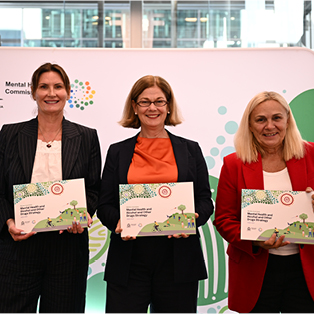
Launch of the Mental Health and Alcohol and Other Drugs Strategy 2026-2031
April 2026
The State Government released the Mental Health and Alcohol and Other Drugs Strategy (Strategy) 2026-2031, aligning to Our Priorities for Government 2025-2029.

Statewide expansion of Crisis Connect
May 2026
$8.83 million invested to support the statewide expansion of Crisis Connect ensuring mental health crisis support is available to children living in remote and regional Western Australia.
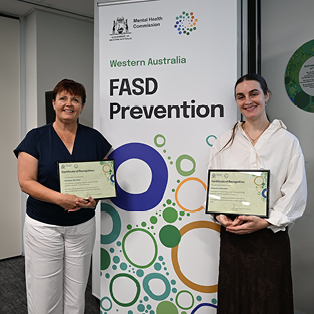
Launch of the Fetal Alcohol Spectrum Disorder Prevention Network
May 2026
The Mental Health Commission launched a FASD Prevention Network to strengthen awareness of the risks associated with alcohol use during childbearing years.

Aftercare Services Program launched
June 2026
The State Government launched an Aftercare Services Program to support people discharged from hospital and emergency departments following a suicide attempt or suicidal crisis.

New 40-bed mental health facility delivered at Fremantle hospital
June 2026
The State Government completed the $88.1 million expansion of Fremantle Hospital. The development included additional inpatient capacity, specialist older adult services, a 24/7 Mental Health Crisis Centre, and a new neurobehavioural unit.

New Acute Care Response Team in the South West
July 2026
A new Acute Care Response Team launched in the South West, a mobile crisis service for children and young people experiencing a mental health crisis.

Lived Experience Inclusion Plans released
August 2026
The Commission released its Lived Experience Inclusion Plan (LEIP). The LEIP is an important step in strengthening how lived and living experience is meaningfully involved in the decisions that affect people, families and communities.

Launch of new virtual mental health service
August 2026
More than $12 million was invested to roll out a new virtual mental health service, WISH, to improve access to specialist care for children, young people and families in regional and remote communities.

Release of A Trauma-Informed Approach: Guidance for WA State Government
October 2026
A Trauma-Informed Approach: Guidance for WA State Government (the Guide) was released to support State Government agencies build safer, more inclusive and resilient communities and workplaces.
What this means for regional and remote Western Australia
Western Australia is vibrant and diverse, with each regional area having its own unique strengths, opportunities and challenges.
Whilst this Strategy provides a statewide approach, it is well understood that the needs of each geographic region differ depending on local circumstances.

Frequently Asked Questions
The State Government committed to developing a new five-year, mental health and alcohol and other drugs system-wide strategy as part of the Government Response to the Independent Review of WA Health System Governance.
- The Strategy’s purpose is to guide the transformation of Western Australia’s mental health and alcohol and other drugs systems to empower and support people, families and communities in their wellbeing.
- The Strategy is the key strategic document for the State, guiding the priorities and areas for focus for the mental health and alcohol and other drugs systems over five years.
- The Strategy provides a shared purpose for government, non-government, private providers and community, including those with a lived or living experience, and their families and significant others.
- At the Mental Health Commission (Commission), we created a Discussion Paper to help start conversations with the community.
- The Discussion Paper was based on reviews of current services and programs, key themes from other policies and strategies, and summarising information received through other previous consultations.
- Public feedback on the Discussion Paper was invited through written submissions, a survey, a phoneline and participation in workshops (online and face-to-face) across Western Australia.
- We also provided grants to key organisations to consult with their own community members.
- This information was then used to develop a draft Strategy.
- There was then the opportunity for stakeholders to provide final feedback of the draft Strategy’s Aspirations and strategic priorities, to make sure the final document accurately reflected what people in Western Australia said through the consultation processes.
- Many different voices were heard from across Western Australia to inform the development of the Strategy.
- This included people with lived and living experience, their families, carers and significant others in every region across Western Australia.
- We also provided grants to key community organisations to undertake direct engagement with their own communities, including people with diverse cultural backgrounds, LGBTIQA+SB communities, people living with disabilities and Aboriginal people.
- Consumers of Mental Health WA also helped create a supportive environment for people with lived and living experience during in-person and online workshops.
- For more information, please see the Consultation Summary report.
- The Strategy’s implementation needs to be flexible and adaptive.
- At the Commission, we will develop Annual Implementation and Monitoring Plans (AIM Plans) that detail specific actions that will be implemented each year.
- These plans will outline the actions the Commission and other key partner agencies are leading or facilitating and help track progress.
- The AIM Plans will be further supported by the Commission’s Agency Commissioning Plan that sets out the guiding principles, intentions and focus areas for commissioning over the short and medium term for community services.
- As the Strategy is a high-level document, frameworks may be developed to support the implementation for particular issues or population groups requiring more targeted directions, such as suicide prevention.
- Regular updates and highlights of key achievements will be shared through our website.
- Please subscribe to our Stakeholder Connect e-newsletter and follow the Commission through our social media channels for updates on the Strategy’s successes.
- The Commission will develop AIM Plans to keep the Western Australian community informed of achievements, challenges and next steps. These reports will demonstrate progress against the previous year’s AIM Plan and will be published on our website.
- This will be supported by the Commission’s person-centred Mental Health and Alcohol and Other Drugs Outcomes Measurement Frameworks, which provide one approach for monitoring alcohol and other drugs and mental health outcomes in the Western Australian population.
- The Strategy is necessarily broad as it covers the entire Western Australian population.
- However, we know that some groups of people need specific consideration as they are disproportionately impacted by mental health and/or alcohol and other drugs related issues.
- The Strategy aims to recognise the similarities, as well as the unique differences of the mental health and alcohol and other drugs systems and sectors, the regions and the intersections of culture, religion, language, gender, sexuality, health, disability, trauma and determinants of health and wellbeing.
- As the Strategy is a high-level document, frameworks may be developed to support the implementation for particular issues or population groups requiring more targeted directions, such as suicide prevention.
- While the Strategy’s Focus Areas include the priorities for all of Western Australia, Appendix G of the Strategy includes regional profiles which recognise the unique needs and mental health and alcohol and other drugs priorities specific to each area.
- The Strategy continues to focus on reforming the mental health and alcohol and other drugs systems, building on past achievements, while at the same time, responding to changing environments and needs of communities.
- Like the previous Western Australian Mental Health, Alcohol and Other Drug Services Plan 2020-2030 (Plan), the Strategy continues to adopt a strong people-centred, needs driven focus, as well as increasing investment in prevention and community-based services.
- This will help to keep people well in the community, out of hospital and connected to their family, friends and community.
- Whilst lived and living experience has been an increasing focus over the last 10 years, there is still more to be done, and this is central to ensuring appropriate programs and services into the future.
- A key difference from the previous Plan, is this Strategy does not define specific targets on bed numbers and hours of service but rather focuses on systems level priorities that will help to achieve a balanced system across the continuum of services.
- The Strategy does not specify who is responsible for funding or delivering services.
- This recognises that the mental health and alcohol and other drugs systems are the responsibility of government, non-government, private providers and the community.
- As the key guiding document for the mental health and alcohol and other drugs systems in Western Australia, it can be used to help inform decisions about future program and service development.
- Annual Implementation and Monitoring Plans will provide an overview of the Commission’s key actions over the immediate term.
The Strategy does not refer to specific service providers, rather it outlines the five Strategic Pillars which reflect whole-of-system priorities ranging from approaches to promote wellbeing for everybody through to specialised supports and acute services for those who need them.
The Mental Health Commission welcomes people from all backgrounds including those with disability, culturally and linguistically diverse backgrounds and the LGBTQIA+SB community.

We acknowledge Aboriginal and Torres Strait Islander peoples as the Traditional Custodians of our State and its waters. The Commission wishes to pay its respects to Elders both past and present and extend this to all Aboriginal and Torres Strait Islander peoples seeing this message.
We recognise the individual and collective expertise of those with living and lived experience of mental health, alcohol and other drug issues and suicidal crisis, including their families and carers.
